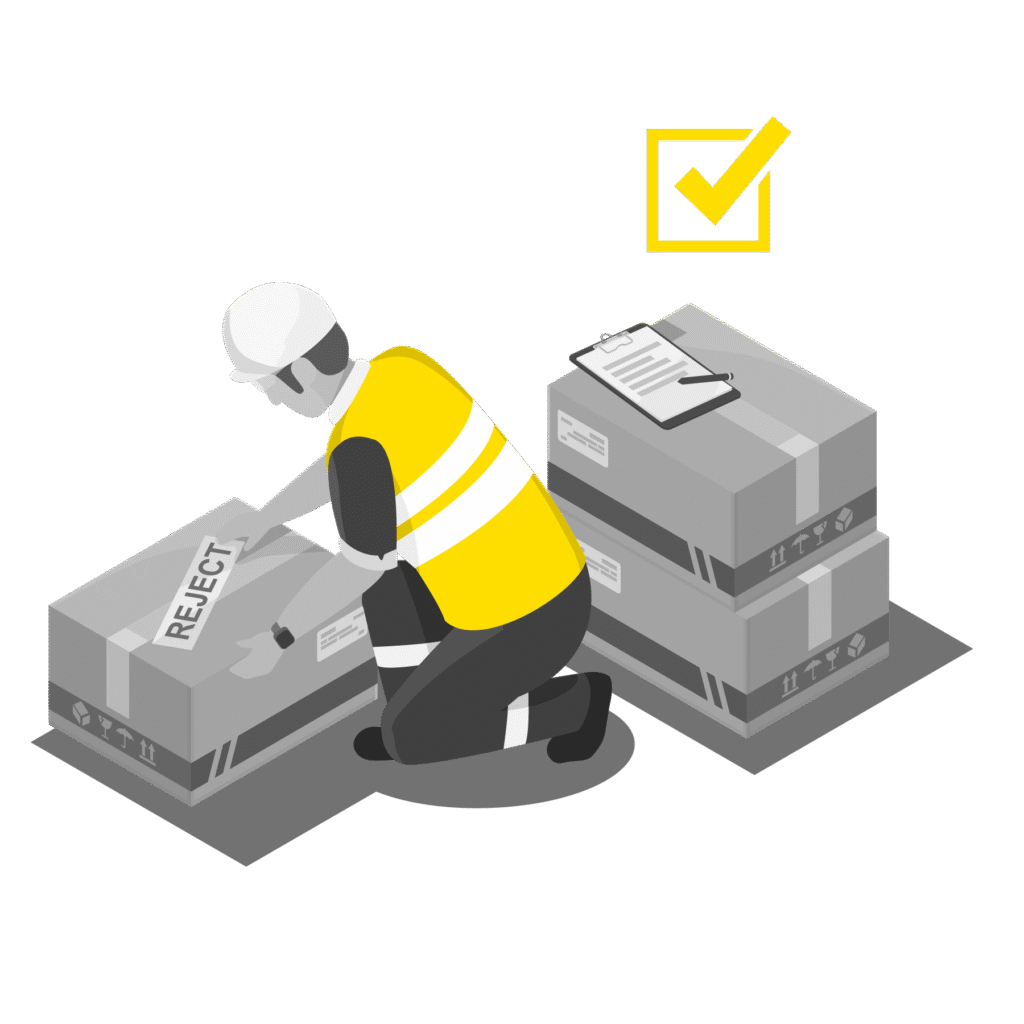

1. Establish On-Site Quality Support Before Launch
Waiting until issues appear is one of the biggest mistakes companies make during SORP. Having experienced quality professionals on-site before production ramps up allows problems to be identified early.
Quality liaison teams can support:
Early defect detection
Immediate containment actions
Communication between the supplier and OEM plant teams
Faster problem resolution on the production floor
This proactive presence helps prevent small concerns from becoming major launch disruptions.
2. Prioritize Rapid Containment and Sorting
During launch, even well-prepared programs can experience quality escapes. When this happens, the speed of containment becomes critical.
Best-in-class suppliers ensure that trained sorting teams are ready to respond immediately. Effective containment includes:
Controlled inspection processes
Clear defect identification criteria
Detailed reporting and traceability
Quick feedback to the supplier for root cause analysis
Rapid response sorting services help protect the OEM assembly line while allowing the supplier to focus on corrective actions.
3. Maintain Clear Communication with OEM Plants
SORP success often comes down to communication. When quality concerns arise, OEM plants expect quick updates, clear status reports, and reliable support.
Professional liaison teams act as the bridge between suppliers and the OEM, helping ensure:
Accurate reporting of quality issues
Immediate escalation when required
Alignment on containment actions
Transparent progress updates
Strong communication builds trust with plant quality teams during high-pressure launch periods.
4. Implement Structured Quality Reporting
Data visibility is essential during SORP. Without structured reporting, teams struggle to track issues, measure progress, and prevent repeat problems.
Best practices include:
Daily quality summaries
Defect trend tracking
Inspection volume reporting
Detailed issue documentation
Experienced quality service providers help ensure that reporting is consistent, accurate, and useful for decision-makers.
5. Partner with Experienced Launch Support Teams
SORP is not the time to rely solely on internal resources that may already be stretched across multiple programs.
Specialized quality support teams bring:
Automotive launch experience
Trained inspectors and quality engineers
Rapid deployment capabilities
Proven containment and sorting processes
Having the right partner allows suppliers to maintain production stability while protecting their reputation with OEM customers.
Supporting Successful Launches
SORP is a defining moment for any automotive program. With the right preparation, communication, and quality support in place, suppliers can navigate launch challenges while maintaining production flow and customer confidence.
At Team Quality Services, we support Tier 1 suppliers with experienced quality liaisons, containment teams, and launch support designed specifically for high-pressure SORP environments.
Our goal is simple: help suppliers protect production, resolve issues quickly, and deliver quality parts when it matters most. 🚗